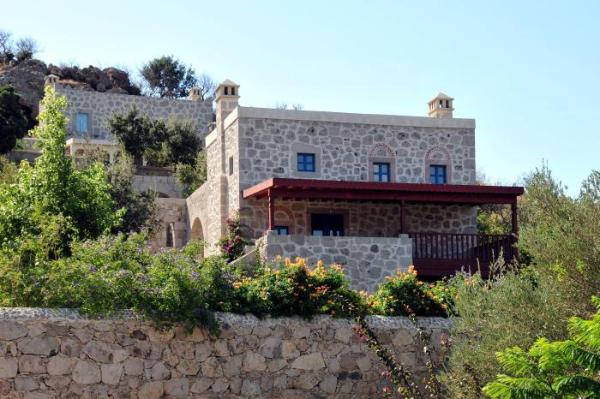
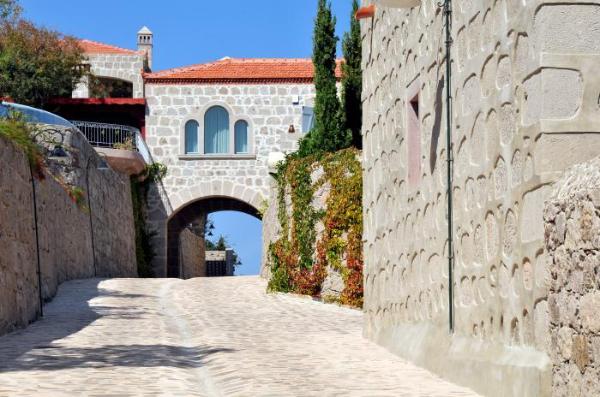
YARBASAN ESTATESCurrent architectural products, emerging as a response to crowded populations, industrial production and the market economy, demonstrate short-term solutions, nourished by fashionable trends. While locations such as Bodrum, rich in historical and natural assets, require solutions that emphasize traditional values. Having no chance of competing with industrialized products, traditional products of local workshops are almost extinct. Therefore, it is extremely important to create areas where these can be utilized. The co-authors of the project have long been realizing stone houses in Bodrum, parallel to their research on vernacular architecture. This has inspired the idea of promoting a project that could revive the rural settlement pattern. Arif Obdan and Cüneyt Tanman agreed to invest in the project, aiming at leaving a trace through an example of traditional development in the Bodrum peninsula. Yarbasan Houses, located in the Mediterranean town of Bodrum, developed as an experimental project, in search of traditional solutions which could respond to modern ways of life. The project consists of 27 houses of varying sizes, cafés, cistern and several workshops. Alongside designing each individual unit, it was envisaged that they would be combined so as to form a well-defined village pattern. Streets, village squares and the relation among masses were organized accordingly. Traditional building materials and craftsmanship were utilized. Stone used in the construction was supplied mostly from the excavations on site. Wooden beams, brick or stone vaults, domes or arches were used in the roofs or terraces of the buildings, constructed with the local andesite stone. Several workshops were established and corresponding production was realized on site. Artists were invited to participate and also train craftsmen and workers living in the vicinity, in traditional methods of production. Training and job opportunities were created for over 200 locals. This idea emerged as an alternative for the rapid development in Bodrum. The project has demonstrated that it is possible and viable to implement traditional design and production forms, and that stone houses can be adapted to present-day needs. |
|